
Views: 0 Author: Ancheng Publish Time: 2026-03-20 Origin: Site
As global awareness of environmental issues continues to rise, the food packaging industry is undergoing a significant transformation. Single-use plastics—once considered convenient and cost-effective—are now facing increasing restrictions, bans, and consumer backlash. Among the most impacted products are disposable cutlery items, especially spoons.
Biodegradable spoons have emerged as a practical, sustainable alternative that aligns with both regulatory requirements and consumer expectations. In 2026, businesses across foodservice, catering, retail, and hospitality are actively transitioning toward eco-friendly cutlery solutions to remain competitive and compliant.
This comprehensive guide explores everything buyers, importers, and brand owners need to know about biodegradable spoons—from materials and benefits to certifications and global trends.
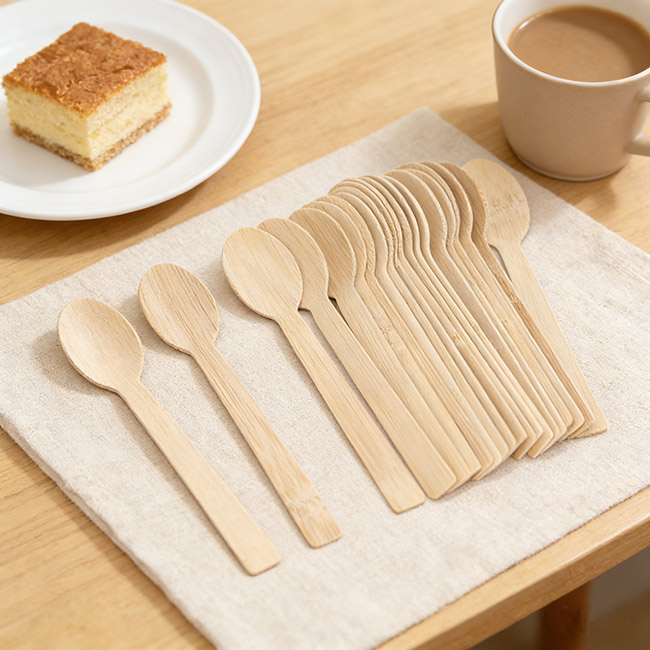
Biodegradable spoons are disposable utensils made from natural or plant-based materials that can break down into organic matter without harming the environment.
Unlike plastic, these materials are renewable, non-toxic, and compostable.
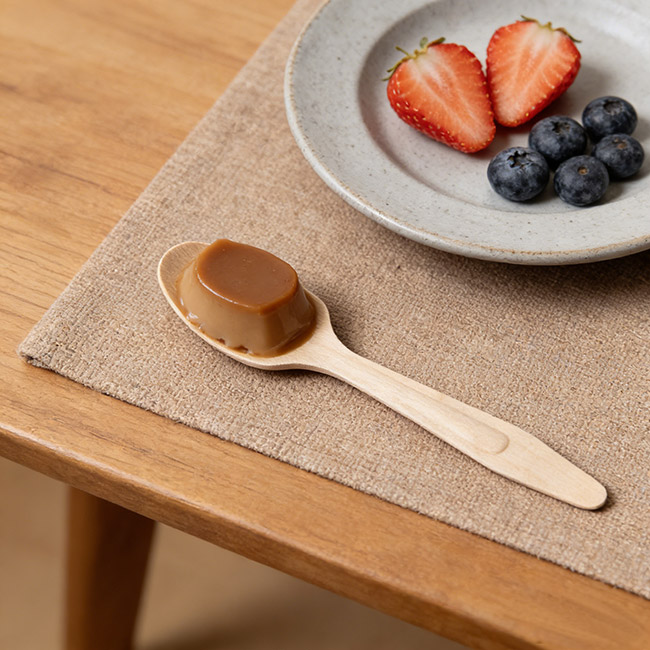
Plastic spoons have long dominated the disposable cutlery market due to their low cost and durability. However, their environmental impact is severe. Traditional plastic can take hundreds of years to degrade, contributing to landfill overflow and marine pollution.
Several key factors are accelerating the shift toward biodegradable spoons:
Countries and regions worldwide—including the EU, the U.S., and parts of Asia—have implemented strict policies limiting or banning single-use plastics. Businesses must adapt or face penalties and supply chain disruptions.
Modern consumers are increasingly eco-conscious. They prefer brands that demonstrate environmental responsibility, especially in packaging.
Companies are integrating Environmental, Social, and Governance (ESG) goals into their operations. Switching to biodegradable spoons is a simple yet impactful step.
Eco-friendly packaging helps brands stand out. It signals innovation, responsibility, and long-term thinking.
Advancements in materials like bamboo, wood, and PLA (polylactic acid) have significantly improved the strength, durability, and usability of biodegradable spoons.
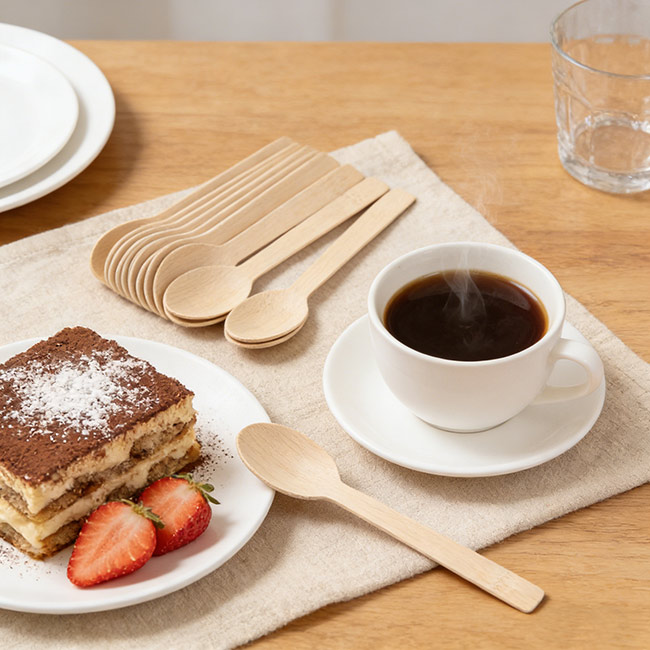
Biodegradable spoons are made from renewable materials such as:
Cornstarch (PLA)
Bamboo
Wood
Sugarcane bagasse
These materials reduce reliance on fossil fuels and lower carbon emissions by up to 75% compared to traditional plastics .
Unlike plastic, which can last centuries:
PLA spoons decompose in 3–6 months in industrial composting
Bamboo and wood can break down naturally within months
This significantly reduces landfill burden.
Using certified biodegradable spoons ensures compliance with:
ASTM D6400 (USA)
EN 13432 (EU)
BPI certification standards
Non-compliant packaging can lead to fines or import restrictions in many markets.
Eco-friendly packaging strengthens your brand positioning:
Attract environmentally conscious customers
Improve ESG (Environmental, Social, Governance) scores
Stand out in competitive markets
Biodegradable spoons are typically:
BPA-free
Phthalate-free
Food-safe
This makes them ideal for restaurants, schools, and healthcare environments.
They are suitable for:
Hot and cold foods
Ice cream and desserts
Takeaway and delivery
Catering and events
Advanced materials like CPLA can handle temperatures up to 85–90°C .
While initial costs may be higher:
Bulk purchasing reduces unit price
Long-term brand value offsets cost
Increasing demand is driving prices down
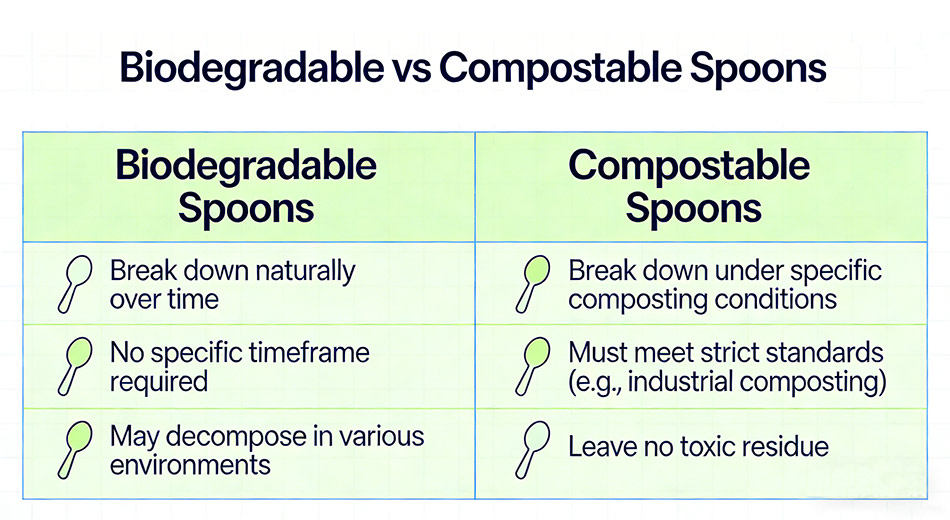
Many buyers use the terms “biodegradable” and “compostable” interchangeably, but they are not the same.
Break down naturally over time
No specific timeframe required
May decompose in various environments
Break down under specific composting conditions
Must meet strict standards (e.g., industrial composting)
Leave no toxic residue
Key Insight:
All compostable spoons are biodegradable, but not all biodegradable spoons are compostable.
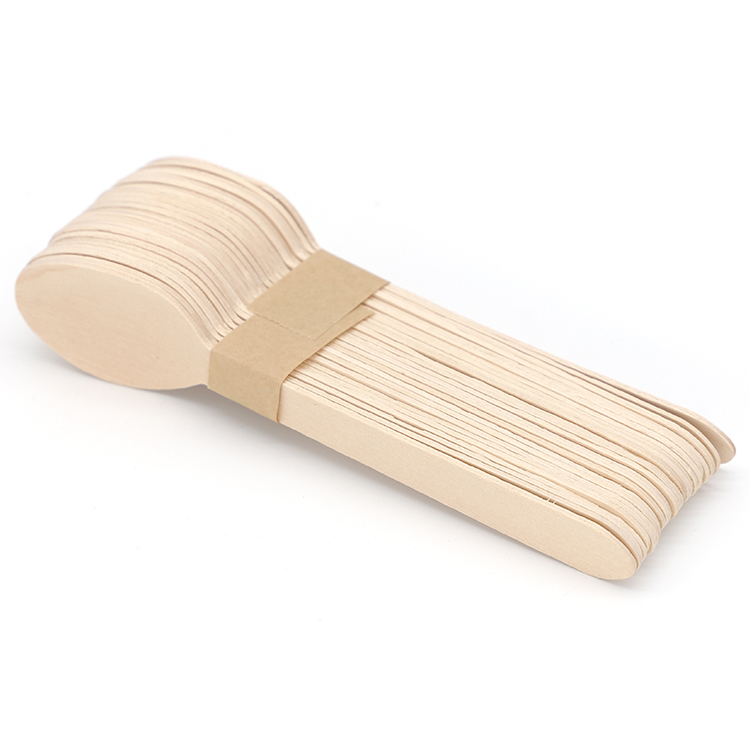
Selecting the right product involves more than just price comparison. Here are the key factors to consider:
Different materials offer varying strength, heat resistance, and environmental benefits.
Ensure the spoons are sturdy enough for intended applications (e.g., hot soups vs desserts).
Check temperature tolerance—especially for hot foodservice operations.
Look for recognized certifications to ensure compliance and credibility.
Branding can significantly enhance product value.
Bulk packaging efficiency impacts shipping costs and storage.
Choose experienced manufacturers with stable production capacity and export experience.
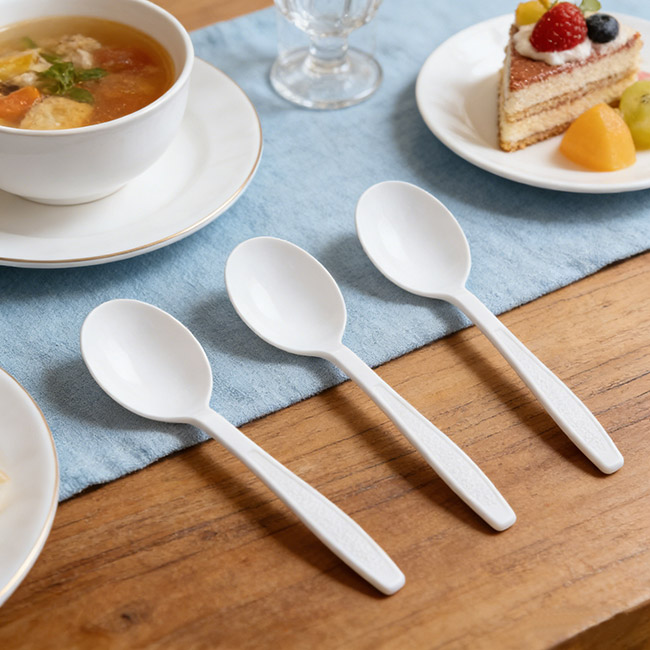
Understanding material options is essential for making informed purchasing decisions.
Derived from renewable plant sources
Smooth texture similar to plastic
Suitable for cold and moderate heat applications
Made from sugarcane pulp waste
Strong, heat-resistant, and compostable
Ideal for hot foods
Natural, renewable, and highly durable
Premium appearance
Suitable for high-end foodservice and catering
Lightweight and cost-effective
Widely used in disposable cutlery
Fully biodegradable
Enhanced heat resistance compared to PLA
Suitable for hot food applications
Compostable under industrial conditions
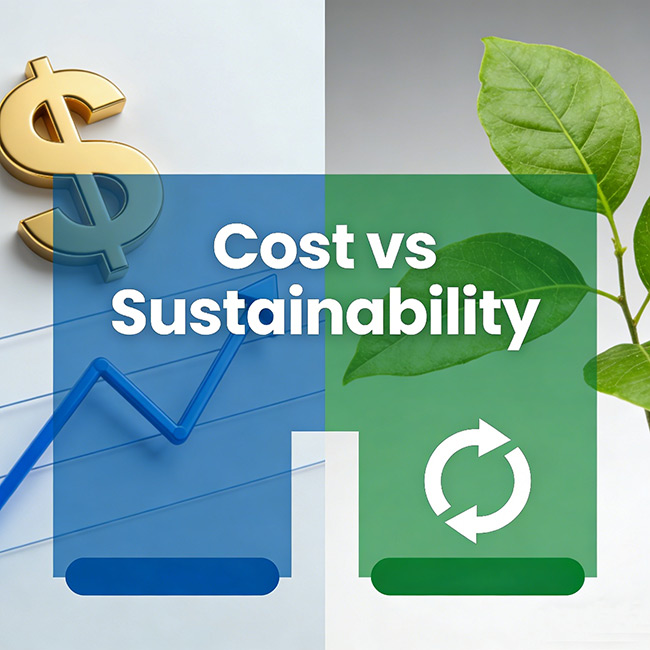
One of the most common concerns for buyers is cost.
Biodegradable spoons typically cost more than plastic alternatives due to raw material and production processes.
Brand Loyalty – Eco-conscious customers are willing to pay more for sustainable products.
Regulatory Savings – Avoid fines and compliance costs.
Market Access – Enter regions with strict environmental policies.
Premium Positioning – Increase perceived product value.
Order in bulk to reduce unit costs
Work directly with manufacturers (like Ancheng)
Choose materials based on application needs
Optimize packaging to reduce shipping costs
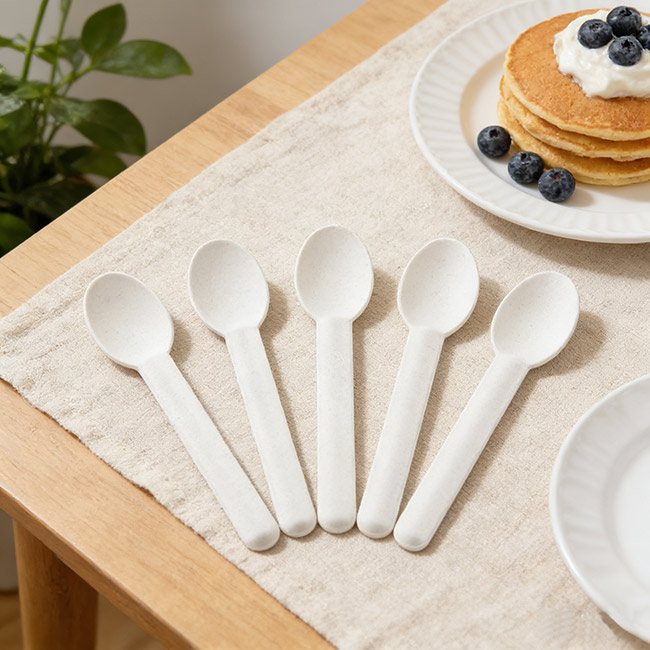
Customization is a powerful tool for differentiation in the B2B market.
Logo engraving or printing
Custom packaging (paper wrap, kraft boxes, opp bag, etc)
Size and shape variations
Private labeling
Enhances brand visibility
Creates a premium customer experience
Strengthens brand identity
Builds customer trust
Restaurant chains
Coffee shops
Airlines and catering services
Retail and supermarket brands
At Ancheng, we offer flexible OEM and ODM services to help clients create unique, market-ready products.
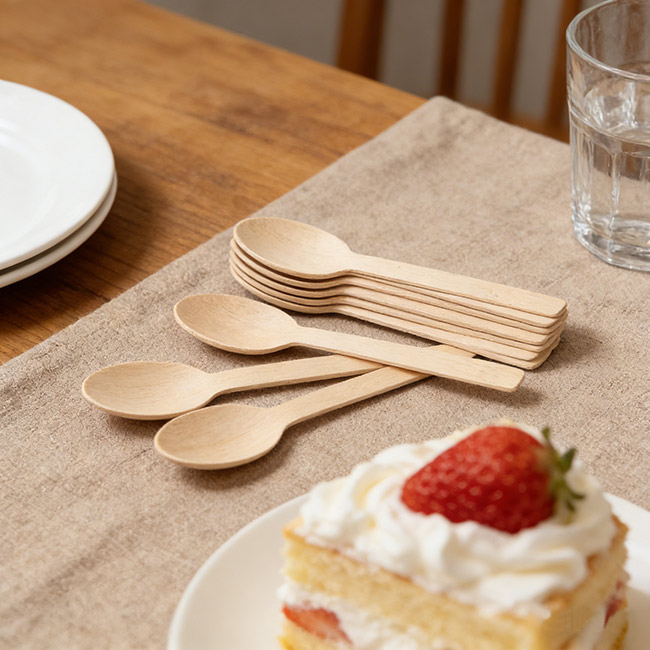
The biodegradable cutlery market is evolving rapidly.
Strict regulations and high consumer awareness are driving demand.
The expansion of delivery platforms is increasing the need for sustainable disposable cutlery.
Retailers are launching their own eco-friendly product lines.
New materials are improving performance and reducing costs.
Buyers are seeking reliable manufacturers in Asia to ensure stable supply.
Certifications are essential for ensuring product credibility and market acceptance.
BPI (Biodegradable Products Institute) – USA
EN13432 – European compostability standard
OK Compost – TÜV Austria certification
FDA – Food safety compliance
LFGB – German food safety standard
Valid certification documents
Testing reports
Labeling accuracy
Compliance with destination market regulations
Certified products build trust with buyers, retailers, and end consumers while ensuring smooth customs clearance.
Biodegradable spoons are no longer a niche product—they are a necessity in today’s sustainable food packaging landscape. For B2B buyers, switching to eco-friendly cutlery is not just about compliance; it’s about staying competitive, building a strong brand, and meeting the expectations of a rapidly evolving market.
From material selection and cost considerations to certifications and customization, choosing the right biodegradable spoons requires a strategic approach and a reliable manufacturing partner.
At Ancheng, we specialize in high-quality wooden and bamboo biodegradable tableware designed for global wholesale and bulk supply. With advanced manufacturing capabilities, strict quality control, and flexible customization options, we are committed to helping our partners succeed in the green economy.
Looking to source premium biodegradable spoons for your business?
Contact Ancheng today to request samples, get a quotation, and start building a more sustainable product line.
Yes. High-quality biodegradable spoons made from bamboo, birch wood, or CPLA are designed to withstand hot foods and liquids. Wooden and bamboo spoons are particularly suitable for soups, rice dishes, and hot meals without bending or breaking.
Yes. Most manufacturers, including Ancheng, provide OEM/ODM services such as:
Logo engraving or printing
Custom packaging design
Private labeling
This helps businesses enhance brand recognition and create a premium product experience.
To ensure quality:
Request samples before bulk orders
Verify certifications and factory audits
Check production capacity and experience
Work with trusted manufacturers like Ancheng
Building a long-term partnership is key to consistent supply.
Look for suppliers who offer:
Verified certifications
Stable production capacity
Export experience
Customization capabilities
Consistent quality control
A reliable supplier is key to long-term success in the eco-friendly packaging market.


